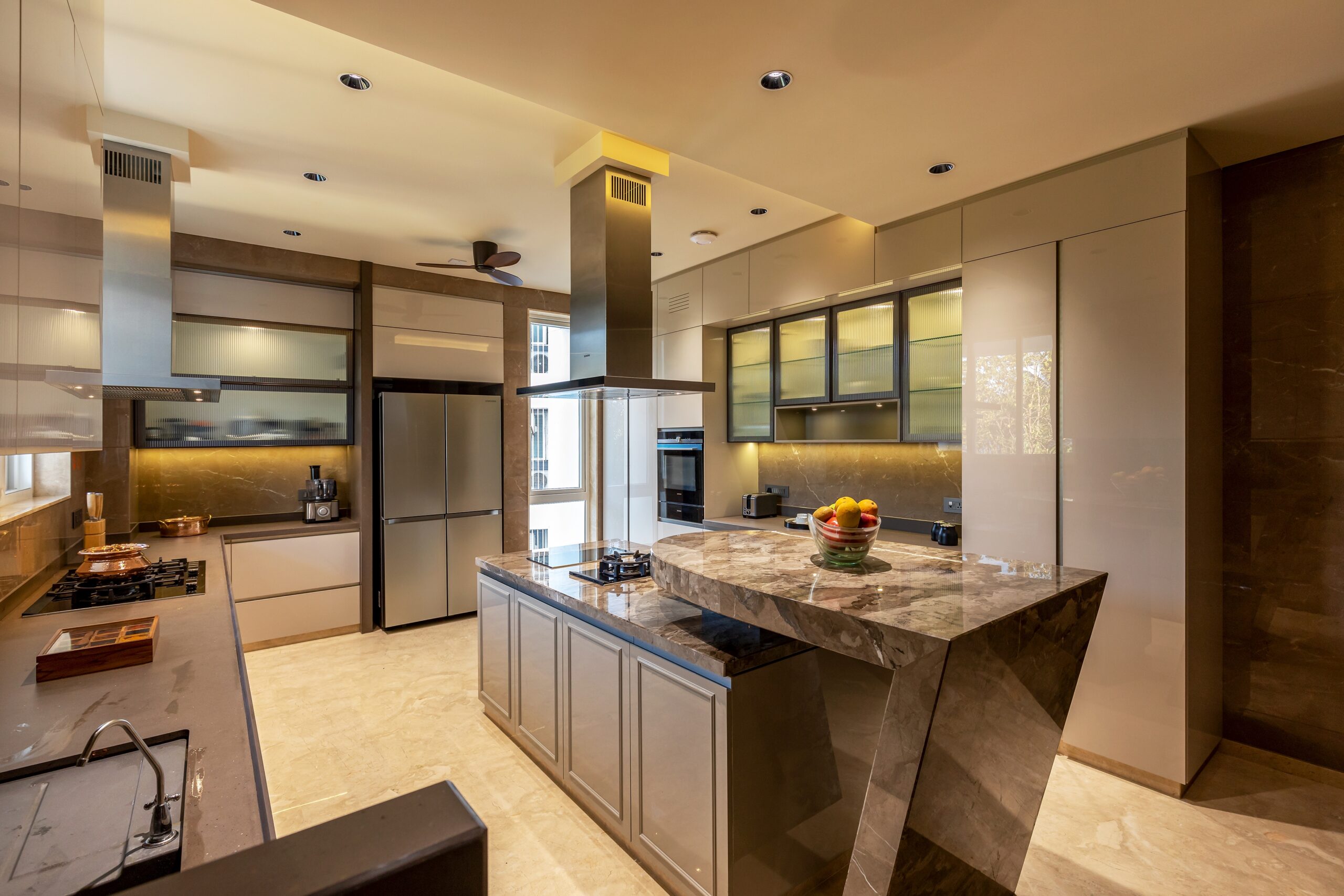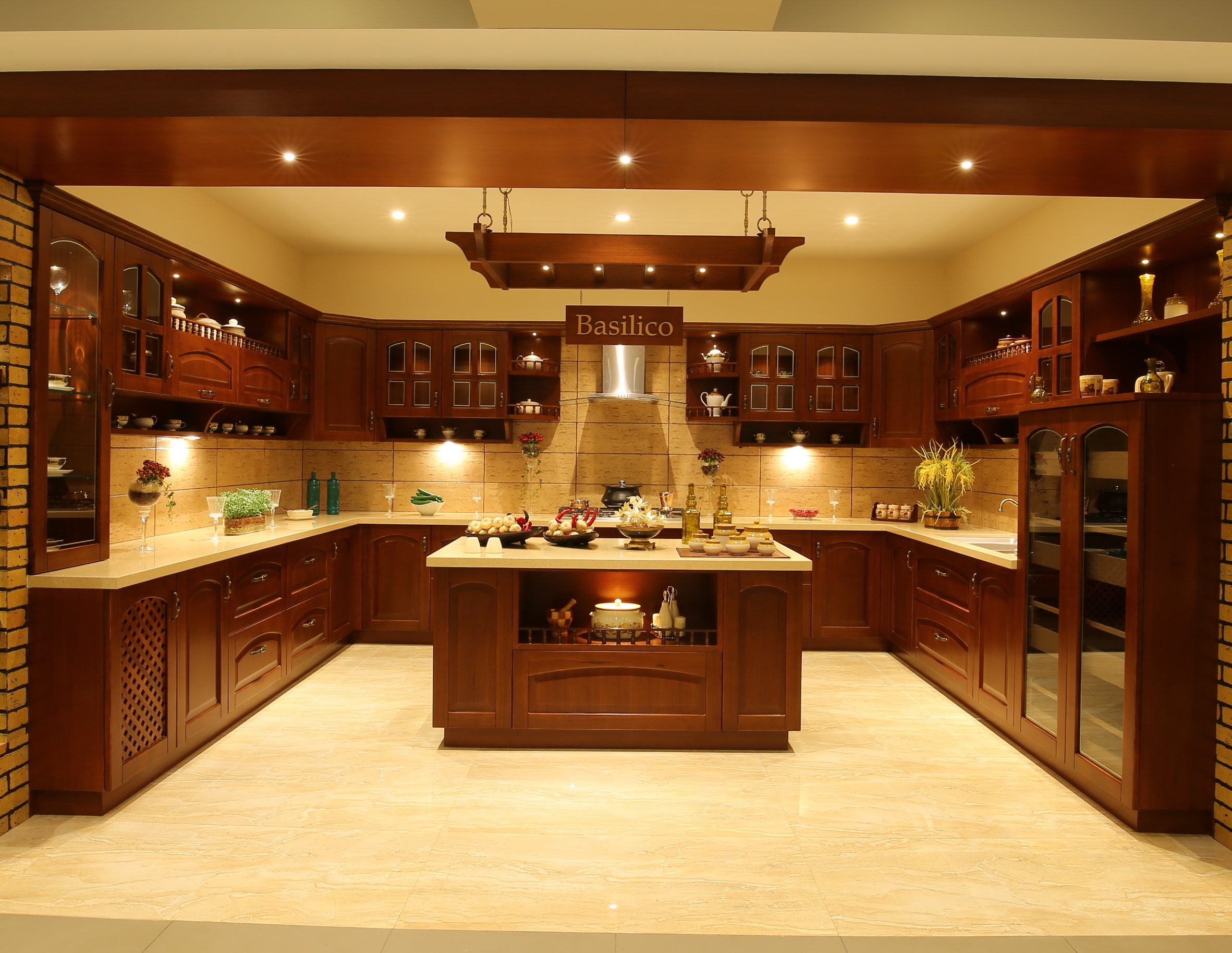
While designing a luxurious home, every room matters. However, the kitchen has a special place in everyone’s mind, as many of us spend maximum time in the kitchen. Hence, everybody needs an exclusive, modern, stylish, and functional kitchen with an appropriately planned layout. A proper layout can help save 20-25 percent of the user’s time. […]
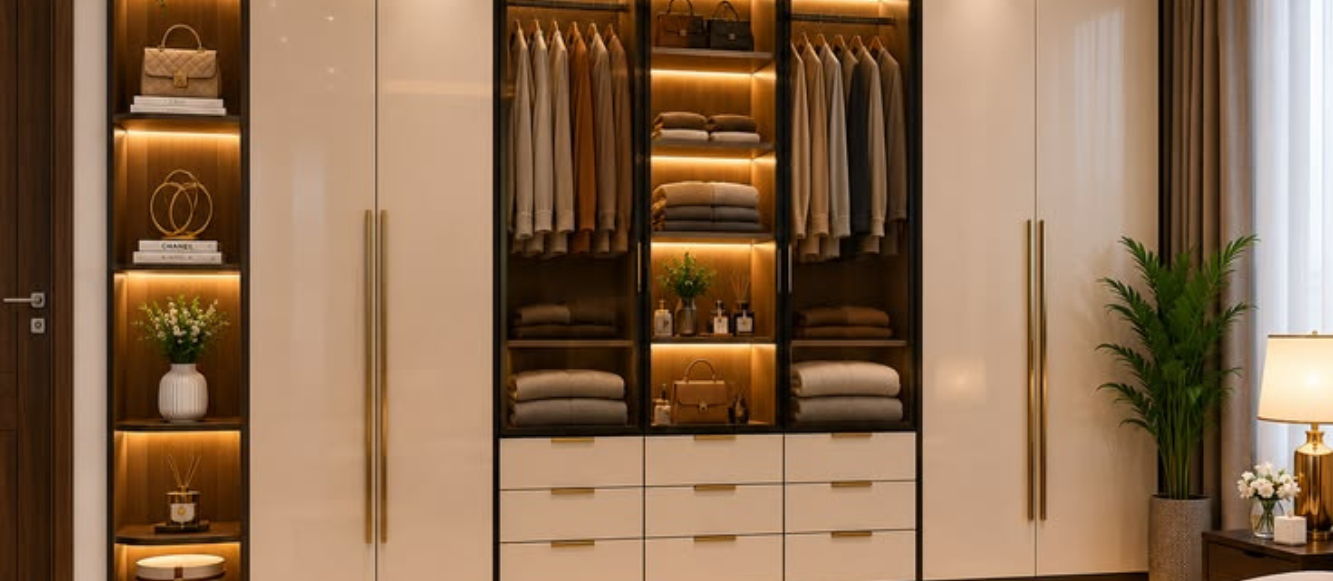
Luxury Wardrobe Furniture for King-Size Bedrooms: Design, Materials and Planning
Introduction
The master bedroom wardrobe is no longer just storage furniture. It defines how the room feels and functions. A well-designed luxury wardrobe creates a boutique-hotel atmosphere that the homeowner experiences every single morning. It also makes daily dressing faster, calmer, and more organised. But poor planning leads to expensive regrets — doors that collide with the bed frame, shelves that overflow within a year, and materials that warp during monsoon season. Every one of these failures is entirely avoidable with the right decisions made before production begins.
Wardrobe Configurations and Approximate Price Tiers
Four main wardrobe configurations cover the premium residential market. Each has a distinct spatial requirement, price range, and visual impact. The right choice depends on your room size, clothing volume, and lifestyle.
Standard Laminate Sliding Wardrobe
This is the entry-level sliding configuration. It uses wood-grain laminate panels on standard aluminium profiles at a depth of 22 to 24 inches. It is a practical, reliable choice for guest bedrooms and entry-level master suites where storage is needed without a significant investment. Budget expectations sit at the lower end of the wardrobe range.
Sliding Wardrobe with Integrated Loft
This configuration runs floor-to-ceiling, capturing every inch of vertical height. The dedicated top-loft section stores bulky travel luggage, seasonal bedding, and items accessed infrequently. It is an excellent choice for urban apartments where vertical storage is the most practical way to increase capacity. It sits in the mid-range bracket in terms of approximate cost.
Premium Tinted Glass Sliding Wardrobe
Tinted glass panels replace standard laminate, creating a sleek, semi-transparent boutique look. A minimum overall width of five to six feet is required for this configuration to function and look proportionate. Tempered, UV-protected glass panels are specified for safety. This configuration commands a higher price than the laminate equivalent and is the most popular luxury mid-range choice in Indian master bedrooms.
Boutique-Style Walk-In Wardrobe
A walk-in wardrobe is a dedicated dressing suite. It integrates open display shelving, a central ottoman, a vanity station with mirrors, and integrated LED lighting. It functions and feels like a personal boutique within the master bedroom. This is the highest-cost wardrobe configuration and the most impactful single upgrade available for a large master suite or luxury villa bedroom. Budget expectations are at the top of the wardrobe range.
What Premium European Wardrobe Design Looks Like
European luxury wardrobe brands set the global benchmark. Molteni and C’s Gliss Master series and Rimadesio’s Cover and Zenit systems showcase how open display shelving, integrated LED accent lighting, and premium materials like Siena oak and classic white lacquer create a walk-in experience that is distinctly different from a standard fitted wardrobe.
These systems often use three walls of integrated storage to utilise the full perimeter of a master suite. The open sections display curated clothing and accessories as a visual feature of the room. Internal LED lighting creates retail-quality illumination at home. These principles can be applied through quality Indian manufacturers at costs significantly lower than importing European systems.
Glass Door Options That Change the Wardrobe’s Character
The glass panel choice defines the wardrobe’s visual personality more than any other single specification decision. Four distinct options serve different design goals.
Clear Glass
Creates a minimalist, open display look. Every item inside is visible at all times. This works best for homeowners who maintain a consistently organised and styled wardrobe interior. It requires discipline but delivers the most visually open feel.
Frosted or Etched Glass
Filters light softly and provides privacy without completely concealing the interior. It reflects ambient room light gently and adds texture to the wardrobe face. An excellent choice for master bedrooms that receive strong natural light during the day.
Tinted Glass
Available in bronze, grey, black, and champagne shades. Tinted glass reduces glare and adds visual depth. Champagne-tinted panels pair beautifully with warm wood interiors and gold hardware. Dark tints complement contemporary grey and white room palettes. This is the most popular glass choice in premium Indian master bedrooms.
Lacquered and Printed Glass
Saint-Gobain’s Colormaxx Dura lacquered glass delivers a smooth, high-gloss surface in any RAL colour shade. Colormaxx Canvas takes this further — custom geometric patterns or abstract artwork are printed directly onto the glass panel, allowing the wardrobe to become a genuine piece of interior design rather than a standard storage unit.
All glass panels specified for wardrobe doors must be tempered or laminated for safety. Frames should use lightweight, corrosion-resistant aluminium. The three most popular frame finishes in Indian master suites are matte black, brushed silver, and matte champagne.
The Hardware That Determines Daily Quality
Premium materials are only as good as the hardware behind them. The right mechanical components determine whether a luxury wardrobe remains a pleasure to use daily or becomes a source of friction over time.
Interior Dimension Planning
Short-hang sections for shirts, jackets, and folded trousers require a minimum of 40 to 42 inches of clear vertical height. Long-hang sections for sarees, gowns, and full-length formal wear need 55 to 60 inches. Both section types must be planned in proportions that reflect the actual clothing inventory — not an estimated guess.
Sliding Track and Runner Systems
Sliding wardrobe doors must operate on heavy-duty tracks fitted with full-extension ball-bearing runners. These components ensure smooth, consistent movement even on wide, heavy glass or mirror panels. Inferior runners drag, skip, and corrode within a few years of daily use.
Soft-Close and Anti-Jump Systems
Soft-close mechanisms decelerate the door in the final few centimetres of its travel, allowing it to close silently and without impact. Anti-jump systems lock the door into the track and prevent derailment during rapid or forceful movement. Both systems are non-negotiable in a premium sliding wardrobe.
Door Handles and Pulls
Rocky Mountain Hardware’s Flute, Cirque, and Portia collections are handcrafted in solid bronze and are a benchmark for luxury wardrobe hardware. Bronze pulls develop a rich natural patina over time. They become more visually interesting with age — a tactile quality that mass-produced handles cannot replicate.
Five Wardrobe Planning Mistakes That Cause Expensive Regrets
These five planning errors are responsible for the majority of wardrobe dissatisfaction reported after installation. Addressing all five during the design stage costs nothing. Correcting any one of them after production has begun is expensive and disruptive.
Mistake 1 — Skipping the Clothing Inventory
Most homeowners estimate their storage needs informally. This is expensive guesswork. Before finalising any layout, count hanging garments by category. Measure folded item stacks to determine shelf spacing requirements — 12 to 14 inches between shelves is the standard for most clothing. Catalogue shoes, travel bags, and seasonal or festival wear separately. This single step prevents the most common wardrobe failure: a unit that is already full on the day of installation.
Mistake 2 — Using One Material Throughout
Wardrobe base panels sit close to mopped floors. Rear panels against external walls are exposed to condensation during monsoon season. Using uniform particle board or standard MDF throughout the entire wardrobe results in swelling, warping, and mould growth over time. The correct approach is zone-specific. Specify BWR (Boiling Water Resistant) plywood for base panels and sections adjacent to damp external walls. Use HDHMR board or standard MDF for dry upper loft sections, where lighter weight and lower cost are appropriate without any performance compromise.
Mistake 3 — Ignoring Door Clearance
Hinged wardrobe doors require 18 to 24 inches of unobstructed swing space in front to open fully. If the bed or adjacent furniture is placed too close, open doors will impact the frame progressively and damage hinges and panel edges. In narrower master bedrooms, always specify sliding doors. However, note that sliding wardrobes require a minimum overall width of five to six feet to function correctly. On wardrobes narrower than four feet, overlapping sliding doors block simultaneous access to most of the interior.
Mistake 4 — Designing at Full Capacity from Day One
A wardrobe that is completely full at move-in leaves no room for lifestyle growth. Festive and wedding-wear accumulates. Winter travel clothing is added. Children’s items take space over the years. High-quality wardrobe design builds a 20 percent storage buffer from the start. This is achieved by installing adjustable shelves on removable pins rather than fixed shelving. Reconfiguring the interior as storage needs evolve takes minutes and costs nothing — no renovation required.
Mistake 5 — Starting Production Without 3D Visualisation
2D drawings do not reveal how a wardrobe will look or feel at full scale inside your master bedroom. Proportions appear very differently when rendered in three dimensions under realistic lighting conditions. Colour matching against existing wall paint and flooring is impossible to judge on a flat plan. Always request and review high-resolution 3D renders from multiple angles before approving production. This step prevents every expensive revision caused by misaligned expectations — and is standard practice among experienced wardrobe designers.
The Wardrobe You Build Once
A luxury wardrobe built with zone-appropriate materials, correct internal dimensions, quality sliding hardware, and soft-close systems will function perfectly for 15 to 20 years. The planning stage is where this outcome is determined. Take the inventory. Specify materials by zone. Insist on the 3D render. Then build with complete confidence.
20 Frequently Asked Questions
Q1. What are the main types of luxury wardrobe furniture for master bedrooms?
A: Luxury Wardrobe Furniture – The four main configurations are: standard laminate sliding wardrobe (entry-level), sliding wardrobe with integrated floor-to-ceiling loft (mid-range), premium tinted glass sliding wardrobe (upper-mid-range), and boutique-style walk-in wardrobe with open shelving and vanity (top tier).
Q2. What is the difference between a sliding and a hinged wardrobe door?
A: Hinged doors open outward and require 18 to 24 inches of clear swing space. Sliding doors move along a track and require no additional floor clearance, making them practical for most master bedrooms. Sliding doors are the standard choice in premium Indian wardrobe furniture.
Q3. What type of glass is best for luxury wardrobe doors?
A: Tinted glass — in bronze, champagne, or grey shades — is the most popular luxury choice. It reduces glare, adds depth, and requires less daily organisational precision than clear glass. All panels must be tempered or laminated for safety. Saint-Gobain Colormaxx options allow full colour and pattern customisation.
Q4. What is a boutique-style walk-in wardrobe?
A: A boutique-style walk-in wardrobe is a dedicated dressing suite that integrates open display shelving, LED lighting, a central ottoman, and a vanity station. It replicates the feel of a retail boutique within the master bedroom and is the most impactful wardrobe upgrade for large master suites.
Q5. What is BWR plywood and why should it be used for wardrobe bases?
A: BWR (Boiling Water Resistant) plywood is a moisture-resistant substrate that protects wardrobe base panels from floor-mopping moisture and monsoon condensation. It prevents the swelling and mould growth that standard particle board and MDF develop near floor level in Indian climates.
Q6. How do I plan the interior sections of a wardrobe for Indian clothing?
A: Short-hang sections for shirts, jackets, and folded trousers need at least 40 to 42 inches of clear vertical height. Long-hang sections for sarees, gowns, and formal trousers require 55 to 60 inches. Both must be planned in proportions that reflect a careful count of the actual clothing inventory — not a rough estimate.
Q7. What is Saint-Gobain Colormaxx glass for wardrobes?
A: Colormaxx Dura is a lacquered glass by Saint-Gobain available in any RAL colour shade with a smooth, high-gloss surface. Colormaxx Canvas allows custom geometric patterns or abstract designs to be digitally printed directly onto the glass panel, making the wardrobe a bespoke design element.
Q8. What is the minimum width required for a sliding wardrobe?
A: A sliding wardrobe must be at least five to six feet wide to function correctly. On wardrobes narrower than four feet, overlapping sliding panels block simultaneous access to most of the interior at any given time, significantly reducing usability.
Q9. Why is a 20 percent storage buffer important in wardrobe design?
A: A wardrobe that is full on move-in day provides no room for lifestyle growth — festive wear, travel additions, and family items accumulate over years. A 20 percent buffer, built in through adjustable shelves on removable pins, allows the interior to be reconfigured as needs evolve without any renovation cost.
Q10. What door clearance is needed for a hinged wardrobe?
A: Hinged wardrobe doors require 18 to 24 inches of unobstructed clear space in front to open fully. If a bed or adjacent furniture sits too close, the open door will impact the frame and progressively damage hinges and panel edges. Sliding doors are the correct solution in tighter master bedroom layouts.
Q11. What hardware brands are associated with luxury wardrobe furniture?
A: Rocky Mountain Hardware’s Flute, Cirque, and Portia collections are handcrafted bronze pulls widely referenced in luxury wardrobe design. Their bronze hardware develops a rich natural patina over time, adding character and tactile quality that improves with age.
Q12. What are soft-close and anti-jump systems in sliding wardrobes?
A: Soft-close mechanisms decelerate the sliding panel in its final few centimetres of travel, allowing it to close silently without impact. Anti-jump systems lock the panel into the track and prevent it from derailing during rapid or forceful movement. Both are essential in premium sliding wardrobe furniture.
Q13. Is standard MDF safe for wardrobe construction in humid climates?
A: Standard MDF is not appropriate for wardrobe base panels or sections adjacent to external walls in humid climates. It absorbs moisture and swells over time. Specify BWR plywood for these zones and reserve HDHMR board or standard MDF for dry upper loft sections only.
Q14. How do I plan shelf spacing for different types of clothing?
A: Folded clothing on shelves typically requires 12 to 14 inches of vertical clearance between shelves. Shoeboxes may need slightly more. Installing adjustable shelves on removable pins is strongly recommended — it allows the spacing to be reconfigured at any time as storage needs change.
Q15. Why is 3D visualisation important before wardrobe production begins?
A: 3D renders reveal actual proportions, colour relationships, and handle placement at full scale inside your specific room. They prevent expensive post-production corrections caused by mismatched expectations between what was described on a 2D plan and what was delivered as a finished installation.
Q16. What are the most popular frame finishes for sliding glass wardrobes?
A: The three most popular aluminium frame finishes in Indian master suites are matte black, brushed silver, and matte champagne. Matte black suits contemporary and dark-palette rooms. Champagne works well with warm wood and gold hardware combinations. Silver is versatile across most room styles.
Q17. How long does a properly built luxury wardrobe last?
A: A wardrobe built with BWR plywood in moisture-risk zones, quality aluminium sliding hardware, and soft-close mechanisms will function correctly for 15 to 20 years. Hardware components like ball-bearing runners and soft-close dampers may require replacement at the 10-year mark under daily heavy use.
Q18. What is the advantage of open shelving in a walk-in wardrobe?
A: Open shelving makes the contents of the wardrobe immediately visible without opening any doors. Curated clothing and accessories become a visual feature of the room. Combined with internal LED lighting, open shelving creates the boutique-store atmosphere that defines the walk-in wardrobe category.
Q19. Should I use the same material throughout the wardrobe or vary by zone?
A: Zone-specific materials are always the correct approach. BWR plywood for the base and any section near external walls. HDHMR or standard MDF for dry upper sections and internal shelving. This combination optimises both cost and durability without compromise at either end.
Q20. What European brands are referenced as benchmarks for luxury wardrobe design?
A: Molteni and C’s Gliss Master series and Rimadesio’s Cover and Zenit systems are internationally referenced benchmarks. They demonstrate how open display sections, integrated LED lighting, and premium material combinations like Siena oak veneer create a wardrobe that functions as both storage and a design statement within the master suite.
YOU MAY ALSO LIKE
-

Busting 5 Myths About Modular Kitchens
Read MoreThe moment you talk about modular kitchens, you usually encounter a storm of opinions and reactions from people. While some will prove helpful, most others would be myths. These myths would usually concern modular kitchen cost, space usage, cleaning hassles, etc. If you’ve undergone a similar experience and need genuine answers to clear the confusion […]
-

Upgrade Your 3BHK Lifestyle with Kitchen decor: Pune’s Renowned Interior Designers
Read MoreA 3 BHK home in a metropolitan like Pune is certainly a matter of pride for everyone. However, in a metro city like Pune, every 3 BHK homeowner aspires to live a top-notch lifestyle. They need upgrades that enable them to keep up with the city’s lifestyle standards. As a pioneer in the modular furniture […]
-

Create a Home that Reflects Your Pride: Why Kitchen décor is the Perfect Choice for Your Interior Design Needs?
Read MoreA home isn’t merely an aspiration but a reflection of an individual’s likes, tastes, preferences, personality, and character. While every home has its unique and innate strength, what makes the home soulful is its interior design. A home’s interiors echo the aesthetic vision of its residents, making it look like a thoughtfully designed masterpiece. At […]