Are you looking to design a modular kitchen for your home but wondering what factors can contribute to its cost? Then, you aren’t alone! As modular kitchen design experts, we come across many prospects concerned about modular kitchen cost and the various factors influencing it. And that’s obvious as everyone has finances to plan and […]
How to Customize a Modular Kitchen for Indian Homes
Are you searching for a kitchen interior designer near me to create a customized
modular kitchen? Customizing a modular kitchen design isn’t just about aesthetics. It is
about personalizing the kitchen space to blend style with functionality. On the other
hand, Indian cooking is diverse and complex. Therefore, you need a kitchen that
accommodates these aspects and endures without compromising performance.
So, how do you customize your modular kitchen design to enjoy the best of both worlds?
Apparently, it may appear a little tricky. However, things can get a lot simpler when you
know what to consider and how to plan the customization.
Here’s a blog that discusses seven essential factors to consider while designing the
modular kitchen that precisely serves your needs.
1. Kitchen Layout
The layout is the most significant part of a modular kitchen. It doesn’t just shape the
space’s aesthetics but also defines the level of efficiency with which you will work.
Accordingly, you must first measure your kitchen’s dimensions and choose the right
layout. Measuring the kitchen and then deciding on the right layout can be challenging.
Therefore, you must work this out with a professional modular kitchen designer.
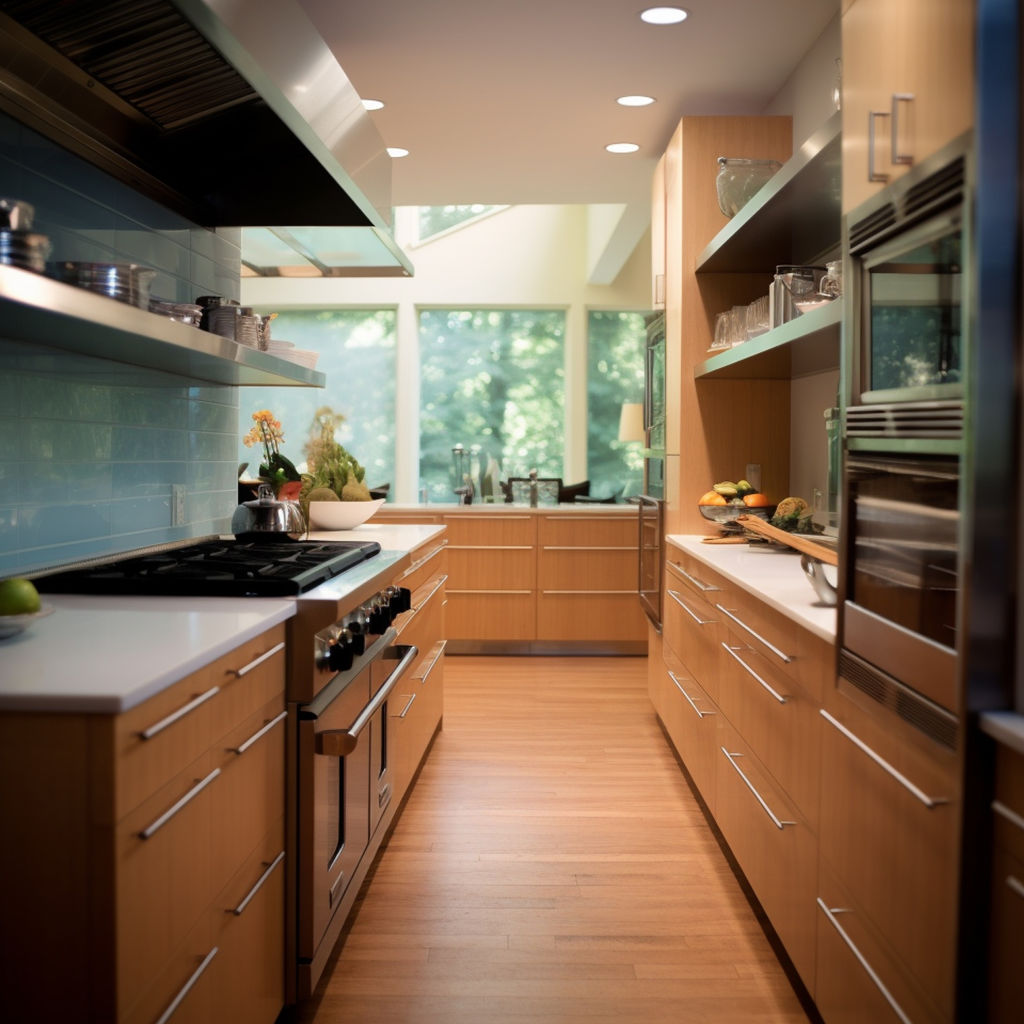
As for layouts, some popular options include U-shaped, L-shaped, island, or straight.
Each shape is designed to suit kitchens of varying dimensions and sizes.
For example, small apartments benefit from straight, parallel, or L-shaped layouts. The
larger ones can explore other widely used layouts like U-shaped and island.
No matter your kitchen size, you must choose a layout that lets you move around easily
and work efficiently across the kitchen space.
2. Ventilation
Indian cooking involves many masalas, spices, deep frying, etc., that create strong
aromas. Therefore, apart from natural ventilation, you must have a robust chimney with
an excellent suction power and that handles fumes and oil residue well to keep your
kitchen smoke- and odor-free.
3. Material Type
Indian culinary habits directly impact the wear and tear of the kitchen. Usually, modern
Indian couples or families do not have the time to maintain the kitchen frequently.
Replacing parts of the kitchen can be expensive!
Accordingly, you must opt for heat-resistant, durable, and easy-to-clean materials.
Some popular materials that exemplify endurance include stainless steel and marble for
countertops, MDF or marine-grade plywood for cabinets.
4. Lighting
Lighting is a multi-dimensional aspect that covers style, safety, and efficiency. Thus, you
can consider combining ambient lighting with task lighting (focused light over
countertops and hobs) and accent lighting (to highlight your kitchen’s features).
5. Ergonomics
You want your kitchen to be functional. But functionality works only when things are
accessible to the kitchen’s primary users. This is where ergonomics steps in.
While designing your modular kitchen, you must carefully calculate the heights of the
shelves, countertops, and appliances based on the user’s comfort. You should also
create storage zones that help define accessibility based on the frequency of usage.
Additionally, you must create a work triangle, the path between the sink, refrigerator, and
hob to ensure minimal movement. Creating a triangle helps improve the workflow and
accelerate the pace of work, enhancing the overall cooking experience.
6. Dedicated Spots for Appliances
Indian kitchens use various types of appliances, including mixer grinders, air fryers, etc.
Therefore, while planning storage and functionality, you must also dedicate spots for the
refrigerator, microwave, dishwasher (if you have one), built-in oven, and more. These
appliances must be arranged to create a seamless workflow in the kitchen.
7. Scalability
Your kitchen needs will evolve with time. Therefore, you must choose a layout that
enables you to expand your storage, appliance space, etc., as your requirements
evolve. It will help you enhance your cooking experience, amidst changing priorities and
expectations. Partnering with a modular kitchen designer in Pune can help you ensure it.
Final Words!
Modular kitchen customization is a comprehensive term that encompasses multiple
factors such as functionality, aesthetics, ergonomics, and scalability.
Considering the above factors and working them out with a professional modular kitchen
designer will help you make your journey easier.
At Kitchen décor, we do that. With 25+ years of experience, serving 18500+ customers,
we don’t just customize kitchen spaces but personalize experiences.
Want to explore our portfolio and discuss your requirements with our experts? Visit our
experience centers in Karve Road, Kothrud, Kalewadi, and SB Road experience
centers.
Frequently Asked Questions
How much does a modular kitchen cost in Pune?
The cost varies based on the customizations you require, the kitchen area, and the
materials you choose. However, at Kitchen décor, modular kitchen range start from Rs.
4,00,000.
Which layout is suitable for small Indian kitchens?
Straight, Parallel or L-shaped layouts are the best-suited for Indian kitchens.
How to increase storage in a small kitchen?
You can optimize storage in a small kitchen by using vertical storage, tall units, wall-
mounted units, and deep drawers.
YOU MAY ALSO LIKE
-

10 Trendy Colors to Make Your Living Room More Spacious
Read MoreThe living room is among the first things people notice in a home. So, for those concerned about style and persona, it has to be flamboyant enough to reflect their majestic choice! But what if you don’t have an as spacious living room? You can still make it look larger with intelligent color choices! So, […]
-

How Custom Wardrobe Designs Maximize Storage and Style
Read MoreAre you planning for a luxury wardrobe design but wondering how a custom one can help you optimize storage and style? Then, you’ve come to the right place. Wardrobes aren’t static storage boxes anymore. They’ve become closets with a style statement. But designing a custom wardrobe involves a lot of effort and expertise. It includes […]
-
How to Choose the Perfect Modular Kitchen Layout for Your Space
Read MoreAre you planning your modular kitchen design but unsure about the right layout that suits your space and culinary requirements? Then, you’ve come just to the right place. Designing the kitchen is one of the most exciting parts of building a new home. However, with so many choices around, selecting the right layout can be […]