Category Archives: Uncategorized

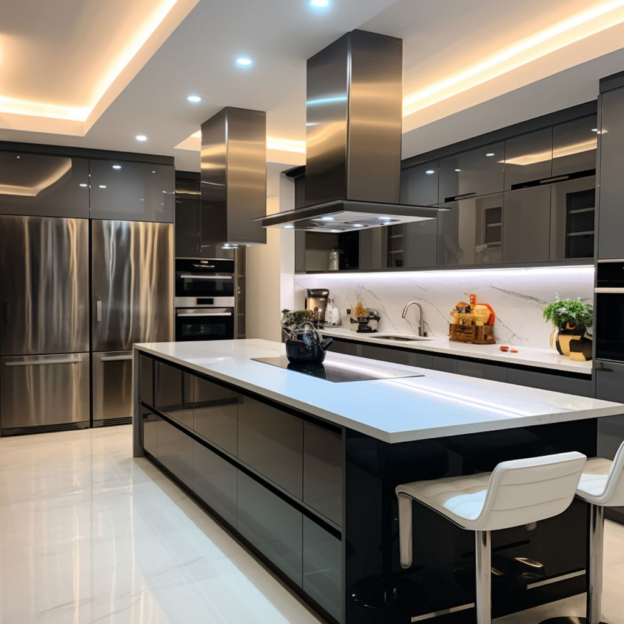
Thinking of a Kitchen Makeover? Transform Your Space with Stylish Modular Kitchen Furniture

Kitchens are no longer cooking spaces. They’ve become dining hubs where family
members come together after a busy day, share laughter, savor delicious food, and
create lasting memories.
Therefore, every kitchen, regardless of its size and layout, is beautiful in its own right.
However, how about giving it a makeover that redefines its beauty, amplifying each
aspect? This is where stylish, contemporary modular kitchen furniture steps in.
Adding new-age furniture not only augments your kitchen’s aesthetics but also optimizes
its functionality. So, let’s delve into the details of such furniture pieces that help you
reimagine your modern luxury kitchen design.

What is Modular Kitchen Furniture?

Many of you would have already encountered this term. But for those who might not, or
are new to it, let’s quickly understand what modular kitchen furniture means.
Modular kitchen furniture comprises pre-designed, factory-made units, assembled onsite
to create the kitchen setup. These units include drawers, shelves, cabinets, countertops,
and storage systems customized to meet your requirements and fit seamlessly.
Factors such as precision, customizability, and ease of installation make modular kitchen
furniture a popular alternative, particularly across modern, urban kitchens.

Why Choose Modular Kitchen Furniture?

Modular kitchen furniture offers some obvious benefits that have made it a hit among
city-dwellers who value aesthetics, convenience, customization, and flexibility. Let’s look
at some of the most significant advantages of modular furniture for the kitchen.

  • Optimal Space Use
  • Modularization allows designing that precisely fits a kitchen’s available space. Therefore,
    whether compact or lavish, every element, including pull-out drawers, corner carousels,
    shelves, tall pantry units, etc., optimizes every inch of the kitchen’s space. It avoids
    cluttering, commonly experienced with standard kitchen furniture.

  • Lifestyle-Based Customization
  • Every home cook uses the kitchen space uniquely. Modular kitchen and its furniture
    respect these differences. Therefore, experienced modular designers craft kitchens and
    elements such as furniture while considering numerous elements such as the kitchen’s
    dimensions, specific culinary requirements, ergonomics, and yes, lifestyle. Therefore,
    the kitchen and its furniture precisely suit your needs and expectations.

  • Contemporary Design and Aesthetics
  • Modern kitchen users look for complete value for money. It includes functionality,
    personalization, optimal space use, and aesthetics. Modular kitchen furniture caters to
    an individual’s aesthetic vision with its range of designs, materials, and finishes.
    Therefore, you can choose from the available range or fully customize your design

  • Contemporary Design and Aesthetics
  • This is another significant aspect. Traditional carpentry involves on-site furniture
    construction and installation. The result is noise, chaos, and discomfort.
    However, installing modular is a much cleaner, more peaceful, and convenient process.
    The modules are built in a factory and only assembled onsite. Therefore, the process
    creates less noise and inconvenience. Additionally, building modular furniture involves
    using premium materials that require minimal aesthetic upkeep and structural
    maintenance.

  • Scalability
  • Urban needs are dynamic. They evolve, requiring significant changes in the kitchen’s
    layout and furniture elements. Accordingly, modular, modern kitchen furniture is flexible
    enough to scale per your needs. Unlike conventional furniture, which is rigid, modular
    furniture allows expansion and adjustments per your evolving requirements.

  • Popular Modular Kitchen Furniture to Include
  • Now that you’ve seen what modular kitchen furniture is and its benefits, let’s look at
    some commonly used pieces of furniture you can use.

    Modular Cabinets and Drawers: Deep storage units, soft-close drawers, and
    built-in organizers help keep everything in order and in place, while minimizing
    noise and wear. Furthermore, cutlery trays and utensil dividers enhance
    accessibility and help keep your kitchen essentials more organized.

    Tall Units and Pantry Systems: Tall units use vertical space, maximizing
    storage without cluttering the kitchen. Pantry pull-outs help you store your
    groceries neatly and access them easily.

    Kitchen Islands: For kitchens large enough, the extra space can be used to
    create an island that serves as additional storage, a mini refreshment counter,
    and a vegetable cutting and chopping area.

    Built-In Appliances: Modular kitchens are designed to integrate appliances.
    Accordingly, you can include microwaves, dishwashers, and chimneys to
    enhance your kitchen’s functionality and aesthetics.

    Final Words

    So, are you prepared to transform your kitchen? Then, choose Kitchen décor. We are
    modern luxury kitchen design experts with 25+ years of experience, serving 18,500+
    clients successfully. We customize your kitchen and its furniture based on your
    requirements to enhance your kitchen experience. Visit us at our experience centers in
    Karve Road, Kothrud, Kalewadi, and SB Road to explore our portfolio.

    Frequently Asked Questions

    Do you manufacture modular kitchen furniture yourself?

    Yes. We operate a 100,000-square-foot manufacturing facility with the latest German
    technology to deliver the highest levels of precision and personalization.

    How much does modular furniture in a modern luxury kitchen design cost?

    It depends on the materials you choose, the customizations you require, and also the
    total area of your kitchen. We recommend connecting with us for an accurate quote.

    Can I install modular kitchen furniture in a small kitchen?

    Yes. With Kitchen décor, you can install modular kitchen furniture even in a small
    kitchen.
    How to Customize a Modular Kitchen for Indian Homes

    Are you searching for a kitchen interior designer near me to create a customized
    modular kitchen? Customizing a modular kitchen design isn’t just about aesthetics. It is
    about personalizing the kitchen space to blend style with functionality. On the other
    hand, Indian cooking is diverse and complex. Therefore, you need a kitchen that
    accommodates these aspects and endures without compromising performance.
    So, how do you customize your modular kitchen design to enjoy the best of both worlds?
    Apparently, it may appear a little tricky. However, things can get a lot simpler when you
    know what to consider and how to plan the customization.
    Here’s a blog that discusses seven essential factors to consider while designing the
    modular kitchen that precisely serves your needs.

    1. Kitchen Layout

    The layout is the most significant part of a modular kitchen. It doesn’t just shape the
    space’s aesthetics but also defines the level of efficiency with which you will work.
    Accordingly, you must first measure your kitchen’s dimensions and choose the right
    layout. Measuring the kitchen and then deciding on the right layout can be challenging.
    Therefore, you must work this out with a professional modular kitchen designer.
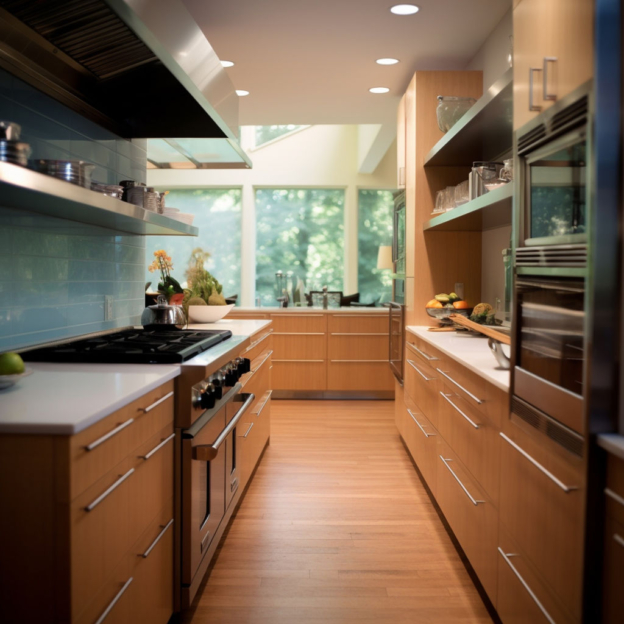
    As for layouts, some popular options include U-shaped, L-shaped, island, or straight.
    Each shape is designed to suit kitchens of varying dimensions and sizes.
    For example, small apartments benefit from straight, parallel, or L-shaped layouts. The
    larger ones can explore other widely used layouts like U-shaped and island.
    No matter your kitchen size, you must choose a layout that lets you move around easily
    and work efficiently across the kitchen space.

    2. Ventilation

    Indian cooking involves many masalas, spices, deep frying, etc., that create strong
    aromas. Therefore, apart from natural ventilation, you must have a robust chimney with
    an excellent suction power and that handles fumes and oil residue well to keep your
    kitchen smoke- and odor-free.

    3. Material Type

    Indian culinary habits directly impact the wear and tear of the kitchen. Usually, modern
    Indian couples or families do not have the time to maintain the kitchen frequently.
    Replacing parts of the kitchen can be expensive!
    Accordingly, you must opt for heat-resistant, durable, and easy-to-clean materials.
    Some popular materials that exemplify endurance include stainless steel and marble for
    countertops, MDF or marine-grade plywood for cabinets.

    4. Lighting

    Lighting is a multi-dimensional aspect that covers style, safety, and efficiency. Thus, you
    can consider combining ambient lighting with task lighting (focused light over
    countertops and hobs) and accent lighting (to highlight your kitchen’s features).

    5. Ergonomics

    You want your kitchen to be functional. But functionality works only when things are
    accessible to the kitchen’s primary users. This is where ergonomics steps in.
    While designing your modular kitchen, you must carefully calculate the heights of the
    shelves, countertops, and appliances based on the user’s comfort. You should also
    create storage zones that help define accessibility based on the frequency of usage.
    Additionally, you must create a work triangle, the path between the sink, refrigerator, and
    hob to ensure minimal movement. Creating a triangle helps improve the workflow and
    accelerate the pace of work, enhancing the overall cooking experience.

    6. Dedicated Spots for Appliances

    Indian kitchens use various types of appliances, including mixer grinders, air fryers, etc.
    Therefore, while planning storage and functionality, you must also dedicate spots for the
    refrigerator, microwave, dishwasher (if you have one), built-in oven, and more. These
    appliances must be arranged to create a seamless workflow in the kitchen.

    7. Scalability

    Your kitchen needs will evolve with time. Therefore, you must choose a layout that
    enables you to expand your storage, appliance space, etc., as your requirements
    evolve. It will help you enhance your cooking experience, amidst changing priorities and
    expectations. Partnering with a modular kitchen designer in Pune can help you ensure it.

    Final Words!

    Modular kitchen customization is a comprehensive term that encompasses multiple
    factors such as functionality, aesthetics, ergonomics, and scalability.
    Considering the above factors and working them out with a professional modular kitchen
    designer will help you make your journey easier.
    At Kitchen décor, we do that. With 25+ years of experience, serving 18500+ customers,
    we don’t just customize kitchen spaces but personalize experiences.
    Want to explore our portfolio and discuss your requirements with our experts? Visit our
    experience centers in Karve Road, Kothrud, Kalewadi, and SB Road experience
    centers.

    Frequently Asked Questions

    How much does a modular kitchen cost in Pune?

    The cost varies based on the customizations you require, the kitchen area, and the
    materials you choose. However, at Kitchen décor, modular kitchen range start from Rs.
    4,00,000.

    Which layout is suitable for small Indian kitchens?

    Straight, Parallel or L-shaped layouts are the best-suited for Indian kitchens.

    How to increase storage in a small kitchen?

    You can optimize storage in a small kitchen by using vertical storage, tall units, wall-
    mounted units, and deep drawers.


    How to Choose the Perfect Modular Kitchen Layout for Your Space

    Are you planning your modular kitchen design but unsure about the right layout that suits
    your space and culinary requirements? Then, you’ve come just to the right place.
    Designing the kitchen is one of the most exciting parts of building a new home. However,
    with so many choices around, selecting the right layout can be a little overwhelming. You
    need a design that perfectly suits your requirements and existing space dimensions. So,
    how do you do that? Here are some practical tips for it.

    Understanding Different Modular Kitchen Layouts

    The key to making an informed choice is exploring the different types of layouts. Let’s
    look at some of the most popular ones.

    • Straight-Line Kitchen

    This layout is suitable for small or studio apartments. It saves space, provides easy
    access to kitchen essentials, and is apt for individuals or couples with minimal cooking
    needs.

    • L-Shaped Kitchen

    L-shaped is another popular layout. It offers flexibility, making moving around and
    working in the kitchen more efficient. The layout is designed along two walls to form an L .

    • Parallel Kitchen

    A parallel kitchen comprises two counters that run parallel. It creates a streamlined
    cooking zone, providing separate sections and maximizing efficiency.

    • U-Shaped Kitchen

    A U-shaped kitchen layout is designed along three walls, resembling a horseshoe. The
    layout provides abundant storage and counter space. So, it is ideal for large families.

    • Peninsula Kitchen

    This one is another layout that intrigues many. It comprises an island attached to the
    main counter. The design provides extra workspace with the island, doubling as a
    breakfast counter and also as a storage space.

    • Island Kitchen

    As the name suggests, an island design includes a central (separate) countertop that
    you can use to chop vegetables, have breakfast, and store kitchen essentials. Usually,

    larger kitchens with an L- or U-shaped layout have an island. Now that you’ve seen the different types of layouts, discover how to select the right modular kitchen layout for your kitchen space.

    6 Factors to Consider While Selecting the Right Modular Kitchen Design and
    Layout

    From assessing the available space to aesthetic appeal, here are six crucial factors you
    must consider while choosing the best-suited modular kitchen design and layout.

    1. Measure and Evaluate the Available Space

    Begin by measuring your kitchen dimensions. If your kitchen is compact, you can go for
    a straight-line or L-shaped layout. However, if you have a big space for kitchen, you can
    go for a U-shaped kitchen layout with an island.

    2. Workflow and Efficiency

    Another essential consideration is workflow and efficiency. Your kitchen layout must
    allow you to work effortlessly. Accordingly, you must position your appliances and
    sections to enable easy and seamless movements while cooking.

    3. Storage Needs

    Storage is among the most critical of all aspects of a kitchen layout. Your layout must
    provide ample space for cabinets and drawers. Besides, you must use your space wisely
    by creating pull-out shelves, corner units, and overhead cabinets to optimize storage.

    4. Lighting and Ventilation

    Ensuring natural airflow is essential to keep your kitchen fresh and odor-free. Thus, the
    layout you choose must allow for windows, exhaust fans, or chimneys. Additionally, the
    layout must not block natural sunlight. Otherwise, you will have to keep your kitchen
    lights and fan perpetually on.

    5. Aesthetic Vision

    Your kitchen should not look separate but an aesthetic part of your home,
    complementing its interiors. Thus, you must choose materials, colors, and finishes that
    align with your aesthetic vision and preferences. Consulting a modular kitchen designer
    can help you make the right, visually compelling choices.

    6. Scalability and Maintenance

    Your needs will evolve with time. Therefore, you should select a layout that allows space
    to accommodate future, larger appliances. Additionally, the layout must be easy to
    maintain and have upgradable modular units to make your cooking experience more
    efficient, despite evolving needs.

    Ready to Create Your Personalized Modular Kitchen Design?

    Kitchen décor is one of the leading modular kitchen designers with over 25+ years of
    experience serving 18500+ customers. Our experts assess your kitchen space and
    requirements to ensure the resultant design is aligned with your vision. Want to explore
    our portfolio? Visit our experience centers in Karve Road, Kothrud, Kalewadi, and SB
    Road experience centers.

    Frequently Asked Questions

    I have a small kitchen. So, which layout is right for me?

    Usually, straight or L-shaped layouts are the go-to choices. They save space, helping
    you optimize the benefit of a modular kitchen design even in a tiny space.

    How much of the minimum walkway space should I maintain in a parallel kitchen?

    It depends on the available kitchen space. However, 3- feet of space is good enough.

    Is a U-shaped layout good for a small space?

    Usually, it isn’t. This layout is apt for medium to large-sized kitchens. Small-sized
    kitchens with a U-shaped layout may feel cramped.

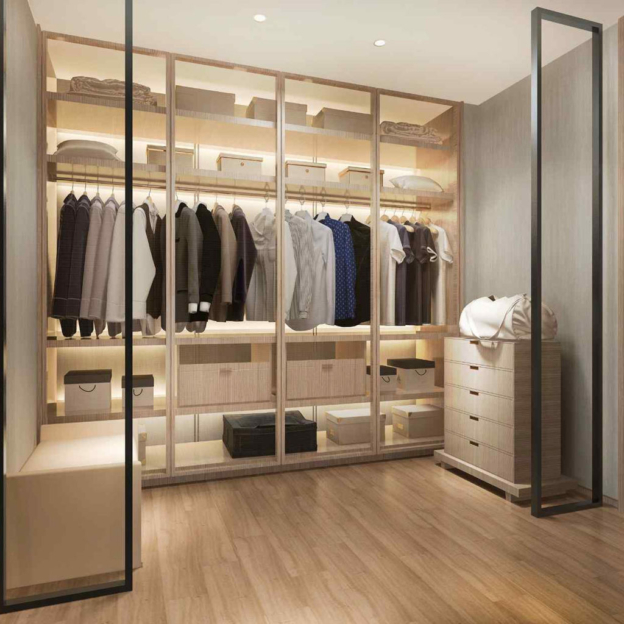
    How Custom Wardrobe Designs Maximize Storage and Style

    Are you planning for a luxury wardrobe design but wondering how a custom one can help
    you optimize storage and style? Then, you’ve come to the right place.
    Wardrobes aren’t static storage boxes anymore. They’ve become closets with a style
    statement. But designing a custom wardrobe involves a lot of effort and expertise. It includes
    reviewing various elements that make up the wardrobe’s optimal storage and style.
    So, let’s look at them to answer your question.

    1. Assembling Your Needs: A Design that Keeps You in Mind!

    Those days when you adjusted your needs according to the wardrobe’s design are long
    gone. Today, we live in the age of customization. Therefore, your needs matter the most!
    Accordingly, the first step in designing a wardrobe is gathering detailed information about
    your needs and priorities. It includes asking questions such as how much drawer, types of
    clothes, accessory, and shoe storage space you may need.
    Next, the expert aligns the design with your daily routines, storage requirements, and
    wardrobe habits. The result is a functional design that perfectly matches your expectations.

    2. Ergonomic Application

    Storage isn’t just about optimization but also usability. Custom wardrobe designing also
    involves applying ergonomic principles to make your wardrobe units more accessible,
    comfortable, and therefore convenient. Some of them include;
    Drawers Instead of Deep Cupboards: Deep cupboards are a conventional option. But full-
    extension drawers prove to be a better alternative than deep cupboards, letting you pull
    items fully without reaching into the cupboard’s rear.
    Right Height and Depth: Bespoke wardrobe design also includes calibrating the depth of
    units and the height of storage zones. Thus, the design minimizes awkward stretching or
    bending, helping you use the wardrobe more naturally.

    3. Zoning and Workflow

    Custom wardrobe designing also involves smart zoning (dividing the space into three zones)
    to make the closet more functional and meaningful. So, here’s how the zoning thing works.

    • Daily Zone: This zone is used for the most-used clothes and accessories. It is
      designed and positioned for maximum accessibility to avoid straining or rummaging.
    • Often Zone: This will comprise items you use often but not every day. Hence, it will
      be slightly less accessible, yet within easy reach, so that you can access those items.
    • Rare Zone: The rare section will include items you use occasionally. Some examples
      include seasonal accessories, party wear, etc. Since you won’t access it as
      frequently, the section will be at a higher or lower ergonomic spot.

    Zoning aims to make your interaction with the wardrobe smoother and seamless. It helps
    you get ready swiftly without digging into the closet space to search for everyday stuff.

    4. Storage Planning

    Storage isn’t cramming stuff mindlessly just because you have space. It is about organizing
    and optimizing the available room smartly. Custom wardrobes help do so through,

    • Extra Storage Strategies: Personalized closets join, and deepen drawers, raising
      their sides to boost capacity. Together, depth and raising sides create more usable
      space.
    • Purpose-Built Sections: A custom wardrobe also includes sections or modules like
      accessory holders, hanging bars, etc., to give every item a dedicated place.
    • Precision Layouts: Each type of clothing has a precise layout that suits its
      dimensions. For instance, blazers or jackets have taller hanging spaces. On the other
      hand, shirts require a shorter room. Drawers store folded items comfortably.

    Planning inch by inch, meticulously, helps avoid space waste while ensuring everything is
    stored neatly and in an organized manner.

    5. Coordinating Style Elements

    Now, let’s talk about aesthetics. Wardrobes must fundamentally complement your bedroom’s
    color scheme, décor, and overall look and feel. A customized wardrobe does exactly this.
    Unlike a traditional or readymade closet, it is personalized to match your bedroom’s visual
    appeal. Designers choose the best-suited finishes, textures, and color palettes to blend
    visually with the bedroom’s interior design. So, the wardrobe looks just like a part of the
    bedroom and not separate from it, even if you don’t build it after designing the bedroom
    interiors.

    Want to Design a Luxury Wardrobe for Your Bedroom?

    Choose Kitchen décor. We are an experienced interior designer with 25+ years of
    experience, serving 18,500+ customers with varying needs and expectations. Our custom
    wardrobes are designed exclusively to serve your functional requirements and aesthetic
    vision.
    Want to know more or explore our wardrobe designs? Visit our experience centers in Karve
    Road, Kothrud, Kalewadi, and SB Road experience centers.

    Frequently Asked Questions

    Why are custom wardrobes better than ready-made ones?

    The obvious reasons include customized storage space, optimal use of the internal room,
    compartments based on your needs, and seamless aesthetic integration.

    How long will my modular wardrobe take to install?

    Installing a modular, luxury wardrobe can take a day or more.

    How much do custom wardrobes cost?

    The cost depends on the level of personalization you need, design complexities, the material
    chosen, visual preferences, and more.


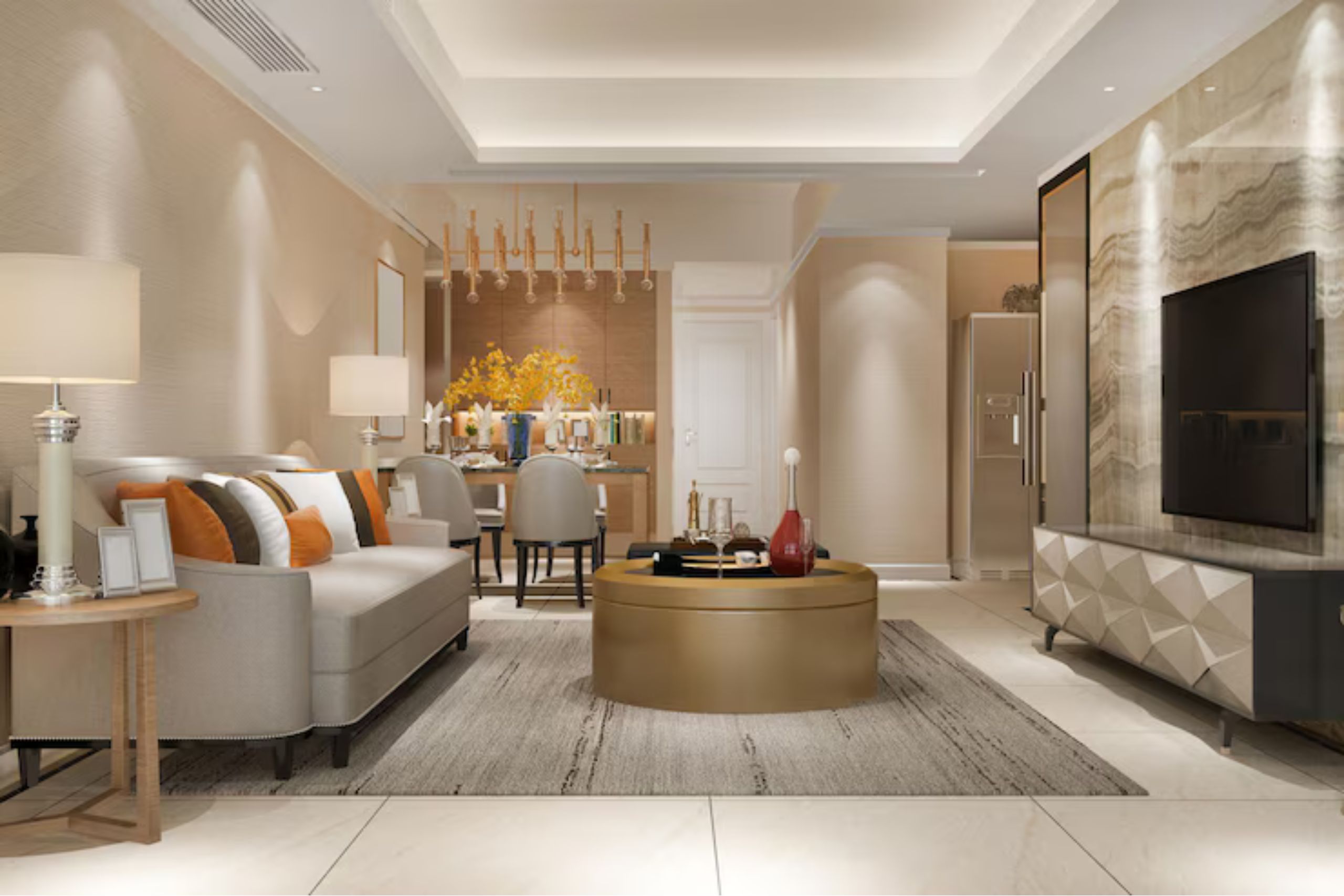
    10 Trendy Colors to Make Your Living Room More Spacious

    Living room sofa table tv

    The living room is among the first things people notice in a home. So, for those concerned about style and persona, it has to be flamboyant enough to reflect their majestic choice! But what if you don’t have an as spacious living room? You can still make it look larger with intelligent color choices! So, what are the trending colors that can help give a roomier feeling to your living area? Kitchen décor, one of the leading home interior designers in Pune, explores ten of them in this blog.

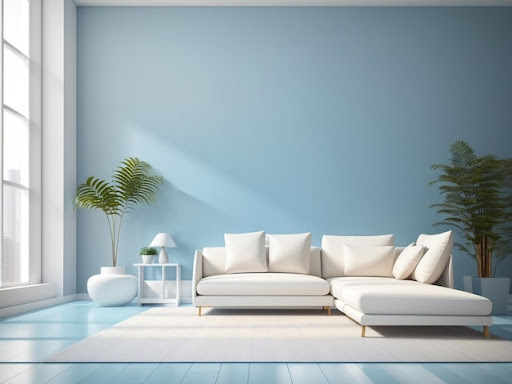
    1. Light Blue

    Living room Light blue White sofa

    Soft blue hues stimulate a sense of serenity and expansiveness. They also add a sense of aesthetic brilliance to your living room, making it look superb and spacious at the same time. So, you may consider using a light blue shade to give your living room an open and exuberant look.

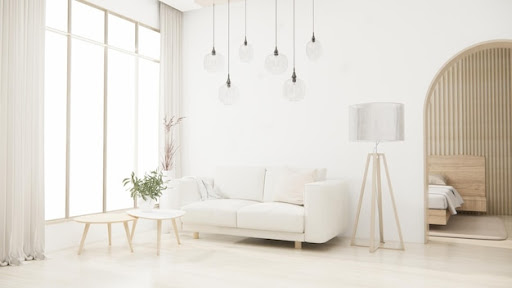
    2. Soft White

    Living room soft white

    White has been a traditional choice when it comes to creating the spaciousness illusion. It fundamentally brightens the room and also works as a backdrop for various other accent colors.

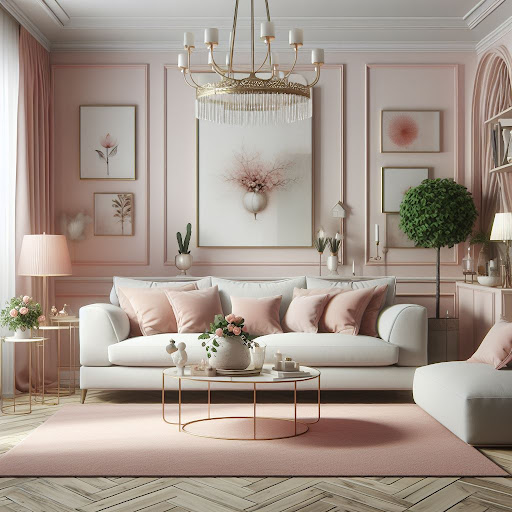
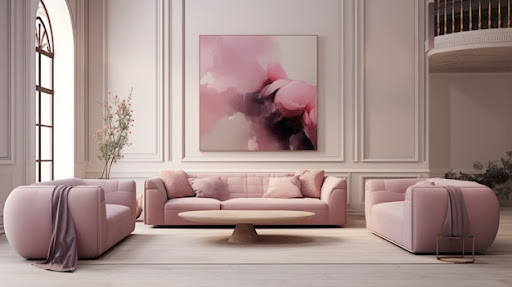
    3. Blush Pink

    Living room Blush Pink

    Pink can enhance your living room’s aesthetic as much as it does yours. Blush pink shades contribute to elegance and sophistication while giving the room the look of virtual spaciousness.

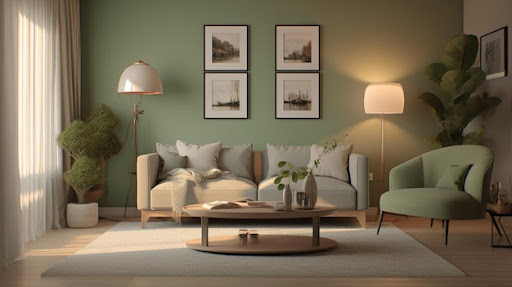
    4. Sage Green

    living room Sage Green

    Sage green has a soothing effect on the eyes and soul. Its soft shade fosters a calming atmosphere and expands your space virtually.

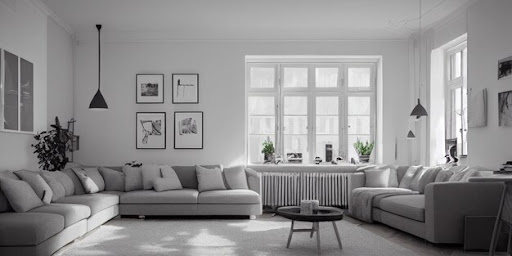
    5. Pale Gray

    living room Pale Gray

    If you haven’t yet tried pale gray, you may want to do it once. Soft gray hues add versatility and make your room look even more spacious by adding depth without dominating the space in any way.

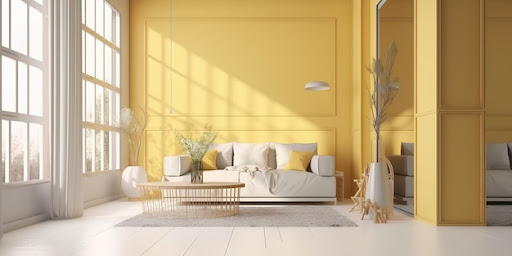
    6. Pale Yellow

    living room Pale Yellow

    Yellow has the same impact as white. So, using yellow to the right extent can make the room look fresh, warm, and bright. That, in particular, can help virtually enlarge the room and make it even more aesthetically charming.

    7. Soft Lavender

    living room Soft Lavender

    Pale Lavender as a color and fragrance is fundamentally associated with freshness. With its simplistic appearance, lavender complements the room’s aesthetics, virtually enhancing its space dynamics.

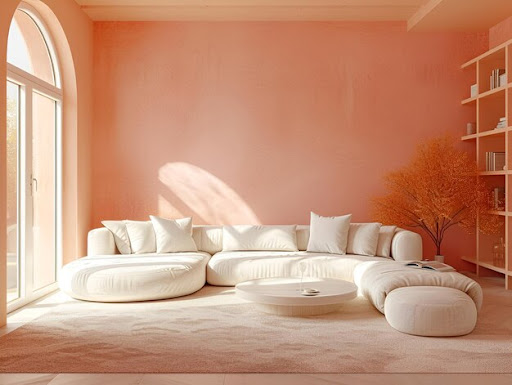
    8. Pale Coral

    living room Pale Coral

    Do you love being in the tropics? If you do, you may choose a pale coral shade for your living room. Soft coral offers a warm and tropical vibe while creating a roomier visual illusion and talking to lengths about the class of your choice.

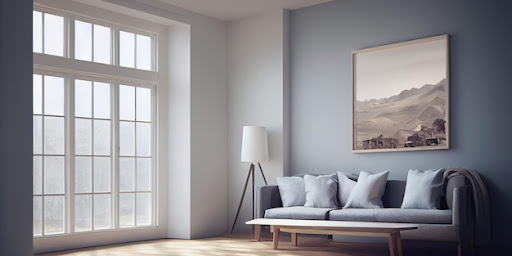
    9. Soft Grayish Blue

    living room Soft Grayish Blue

    Ever tried imagining a soft grayish blue for your living room? You may want to do so if you haven’t. The shade is a subtle combination of gray and blue tones that gives the room a calming and expansive look. So, that’s a great choice if you want to make your living room graceful and at the same time, open.

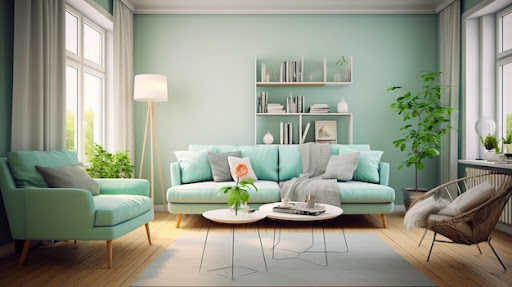
    10. Soft Mint Green

    Living room Soft Mint Green

    Mint green, be it on the wall or in a mocktail, feels fresh and pleasant! The tone gives your room an airy and refreshing feeling to your living room. As a result, the room looks larger and more welcoming.

    While Signing Off!

    We hope the above gives you an idea of some trendy colors that can be used to give your room a virtually broader and more regal look. You may try many more based on your preferences. If you need help, Kitchen décor, an interior design company in Pune, has got you covered! Schedule a visit with us and explore our extensive expertise and what we’ve got in store for you.

    Frequently Asked Questions

    Will you guide us beyond colors when it comes to enhancing the living room space?

    Yes. Of course. As a responsible and experienced interior design company in Pune, our hand-holding goes beyond color choice consulting. As needed, we also provide advice on optimizing your living room space and enhancing its interiors.

    Can contrast colors make my living room more spacious?

    Usually yes. A combination of dark and bright colors creates an illusion of a much broader area. However, a specific answer will require understanding your color preferences and if they will serve the purpose.

    What is the best shade or color to make a living room look large?

    There’s no best choice as such. However, lighter shades optimize that feeling.

    Can painting a room all in one color can make it look larger?

    You should rely more on natural light to make a room look bigger. A blend of natural light and lighter hues automatically contributes to the illusion of a larger room. Our interior designers can guide you in this with more specific answers

    Which colors should I avoid to make my room look smaller?

    Usually, you should avoid dark colors as they make a room look compact.